Banff National Park Photography Prints
Banff photography prints. Fine art wall art from Banff National Park, one of the most photographed and beloved landscapes in Canada.
Banff National Park has been inspiring photographers for over a century, and for good reason. The park is a concentrated expression of everything that makes the Canadian Rockies extraordinary glacier-fed lakes in impossible shades of blue and green, peaks that claw at dramatic skies, and a wildness that somehow coexists with some of the most visited trails on the continent. Within a relatively small area, Banff contains more iconic landscape photography locations than most photographers will visit in a lifetime.
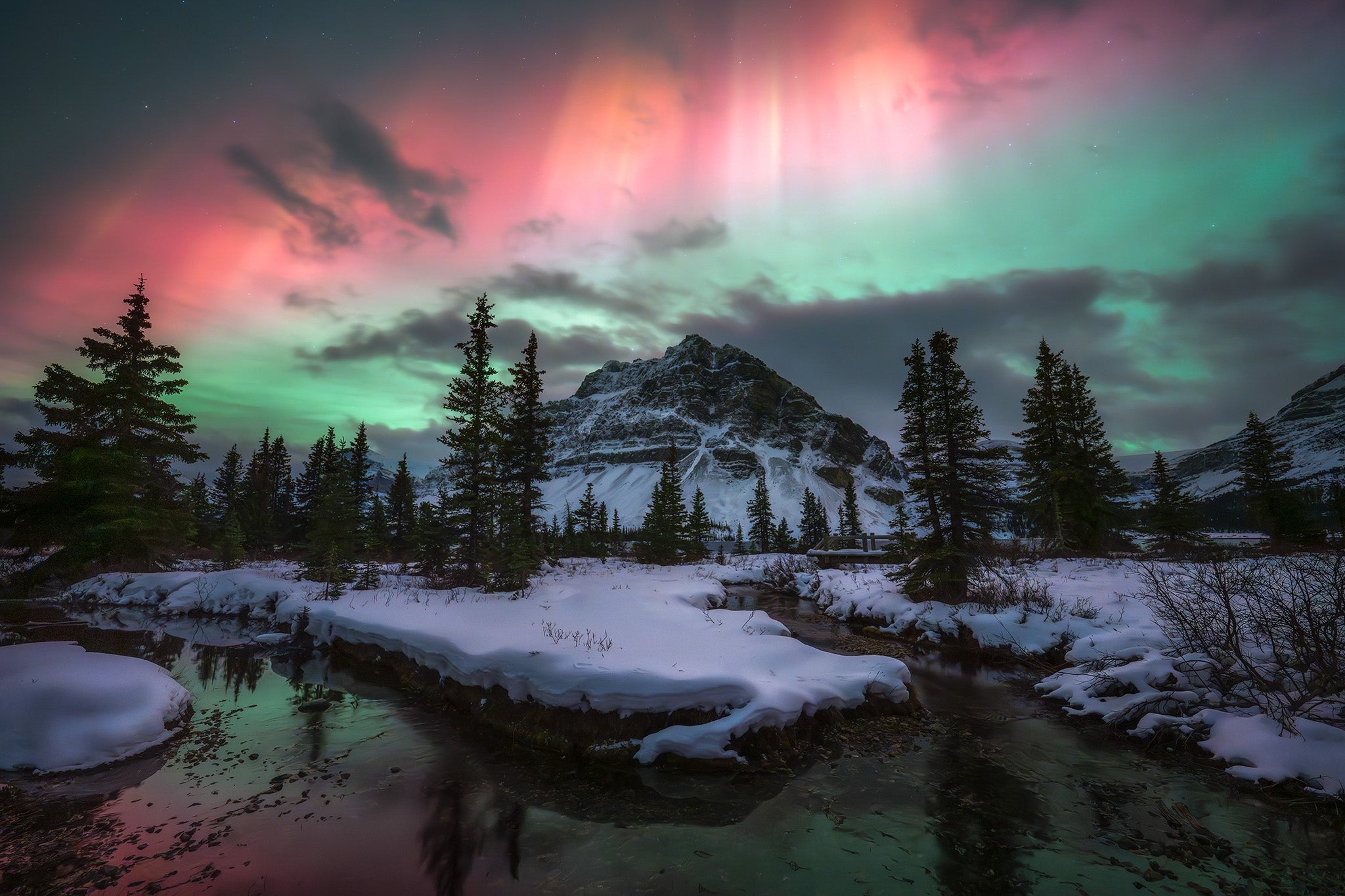
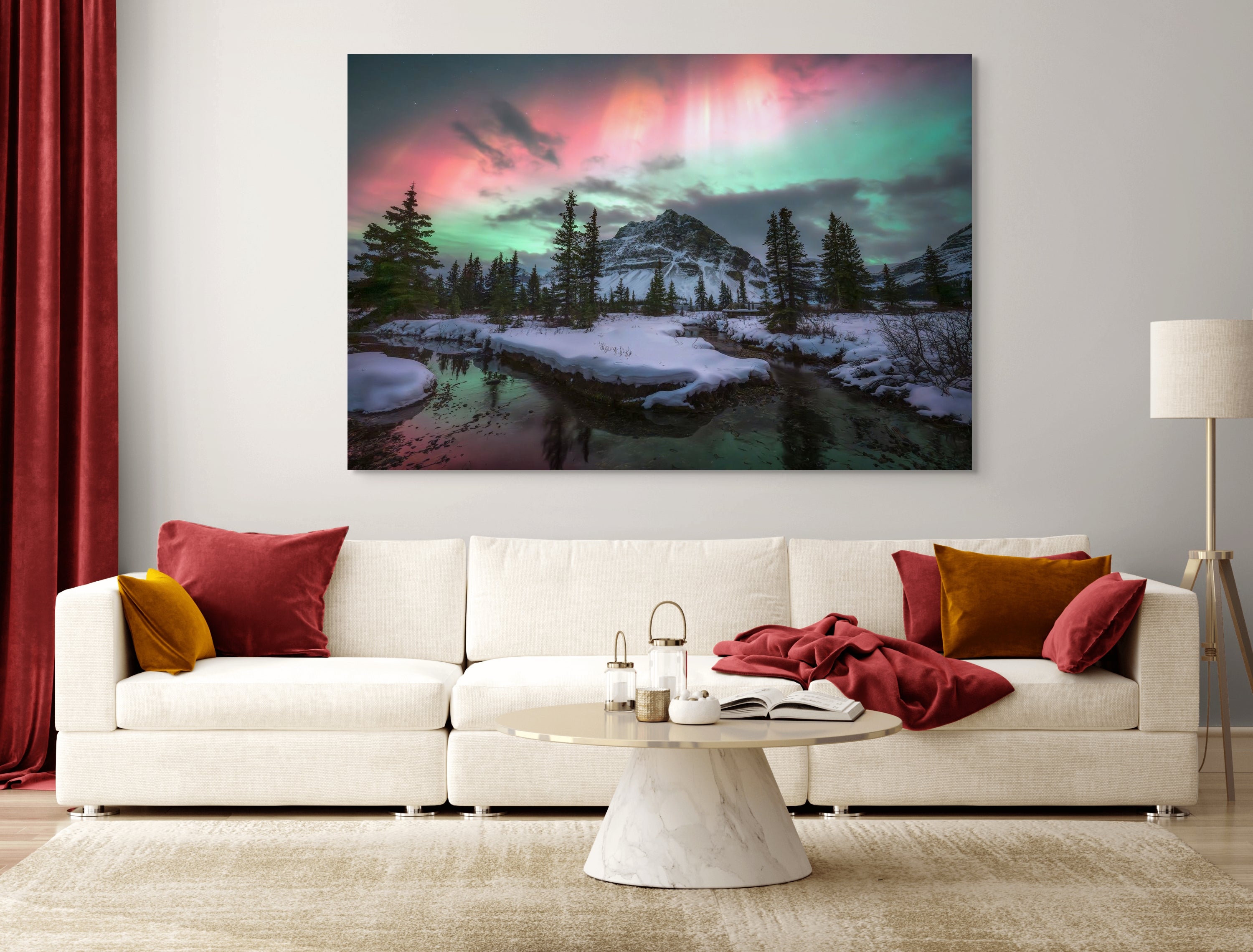
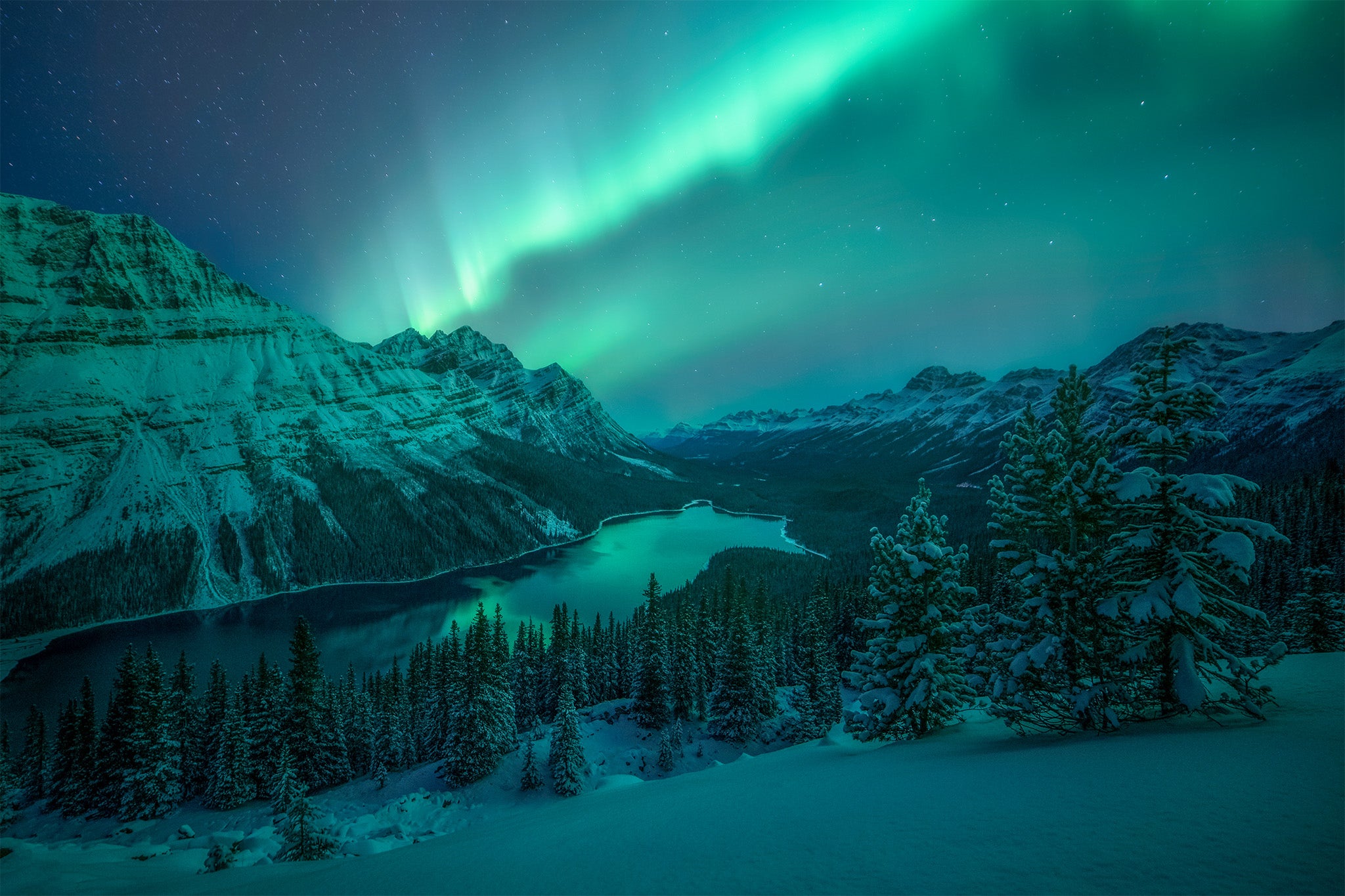
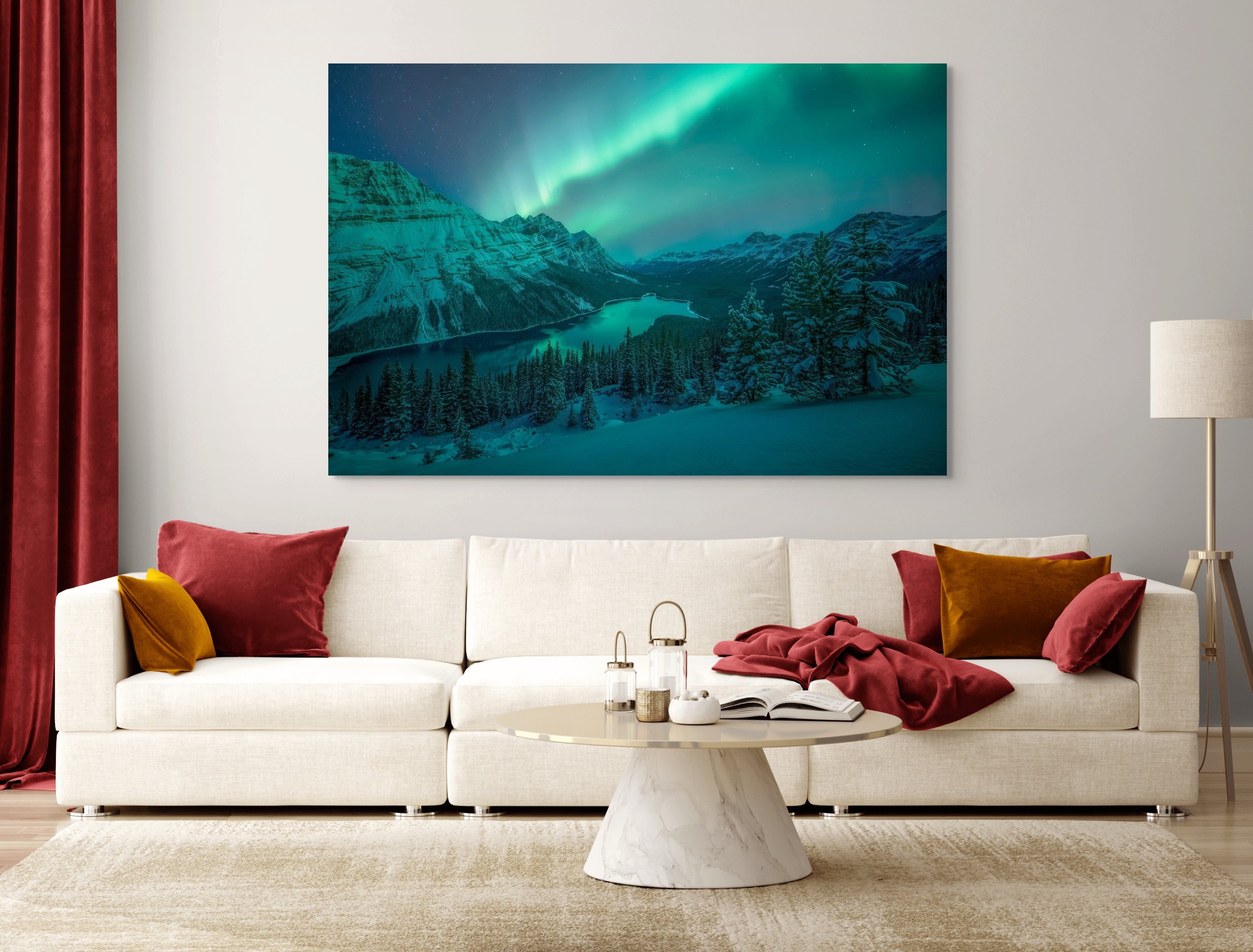
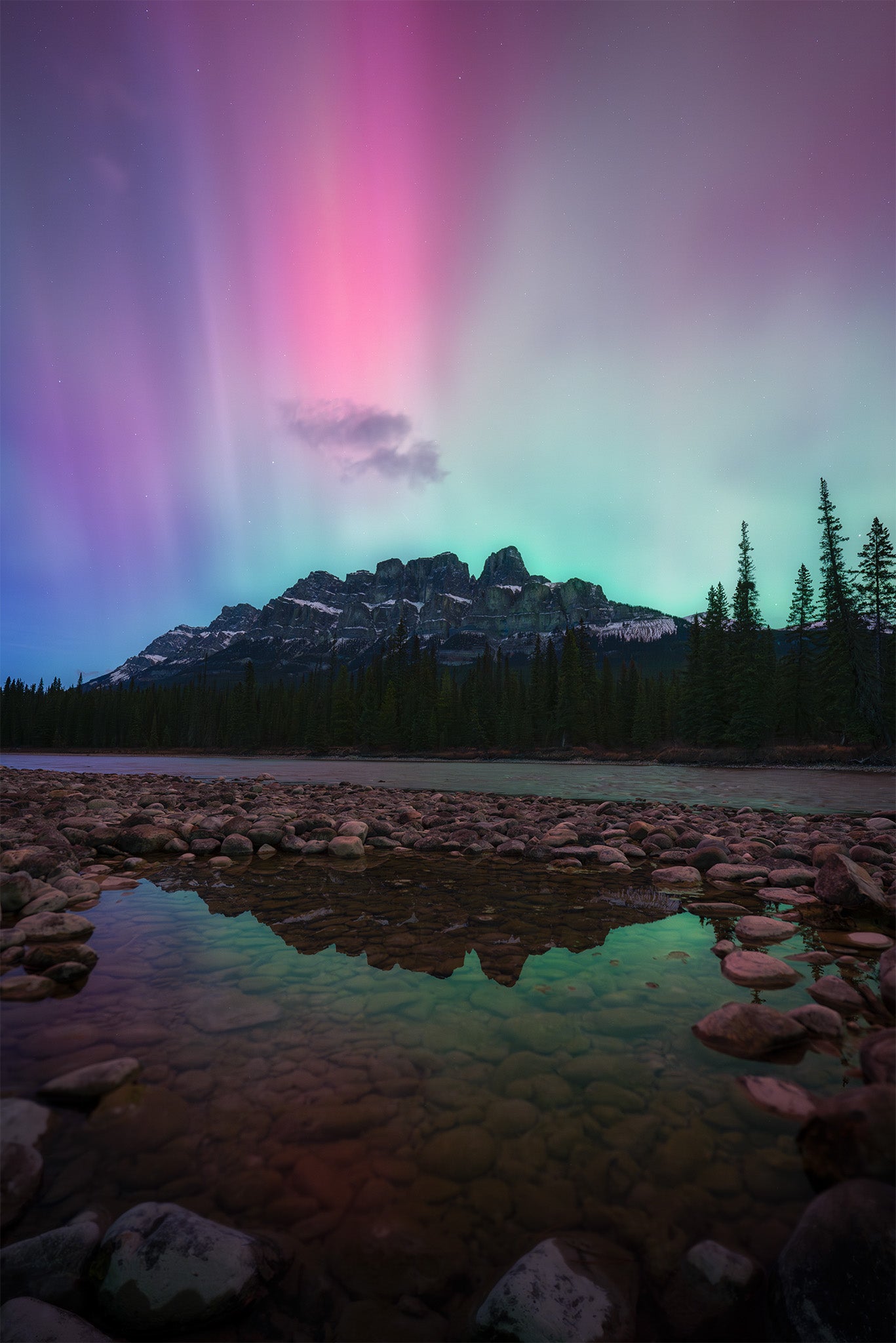
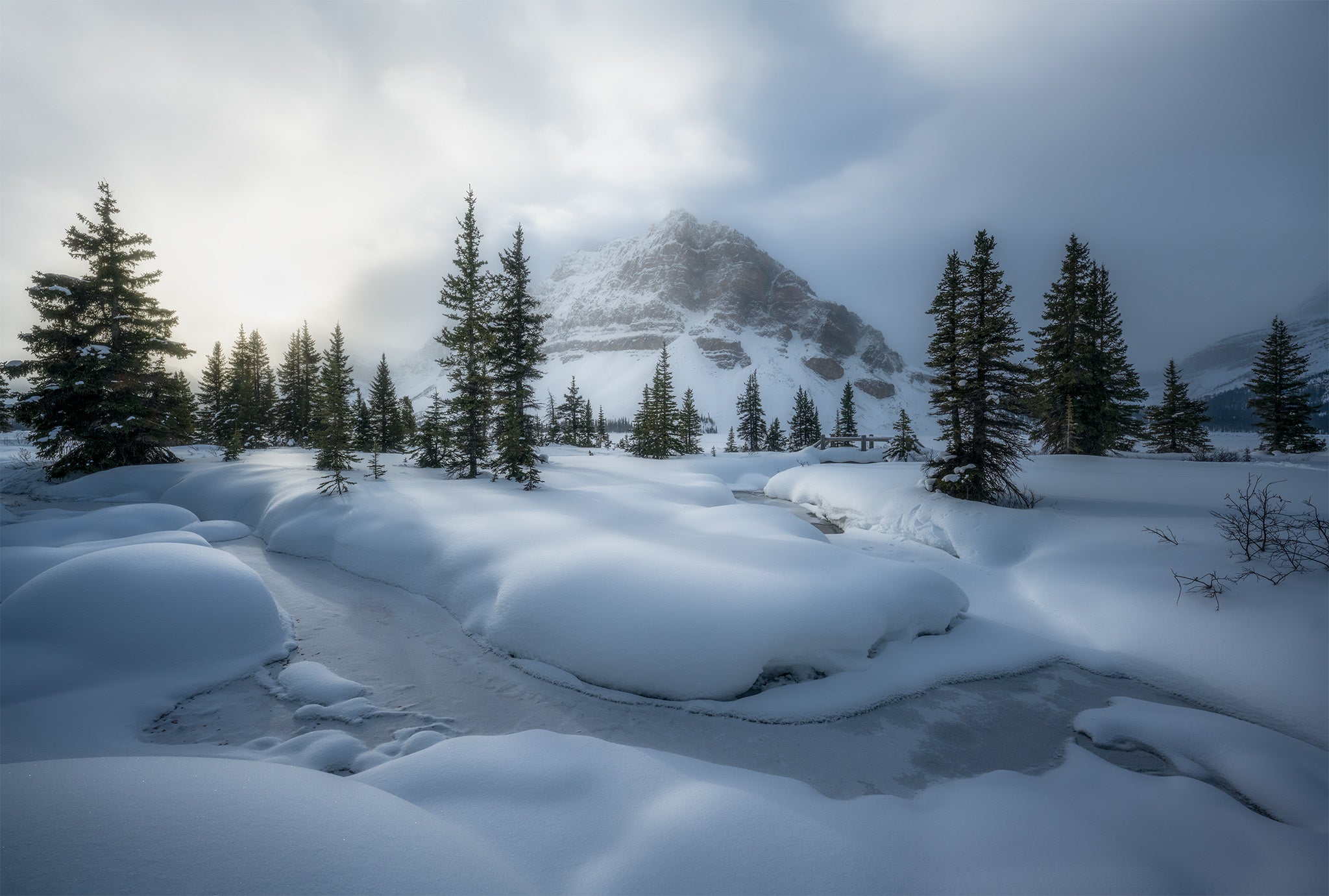
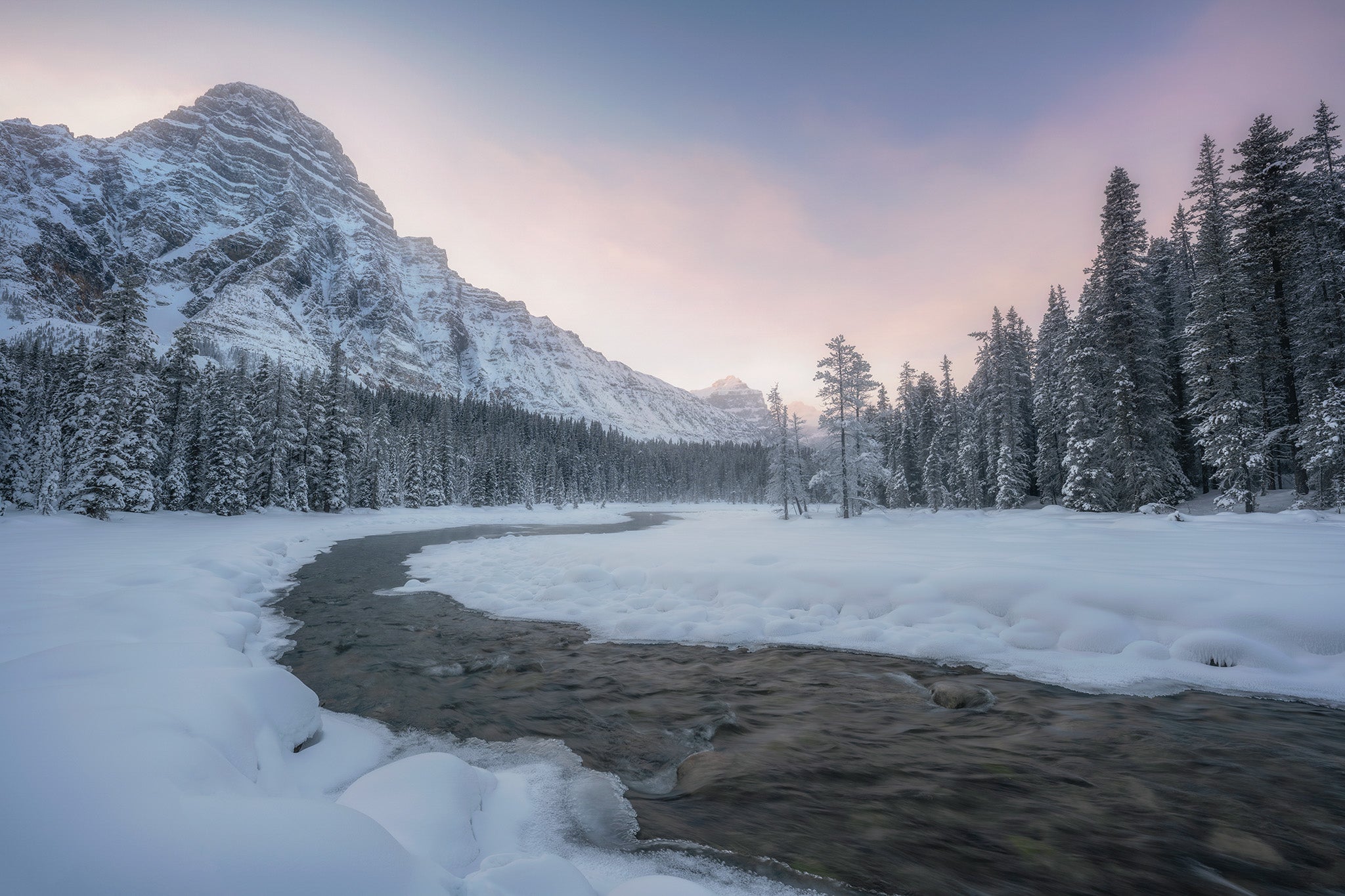
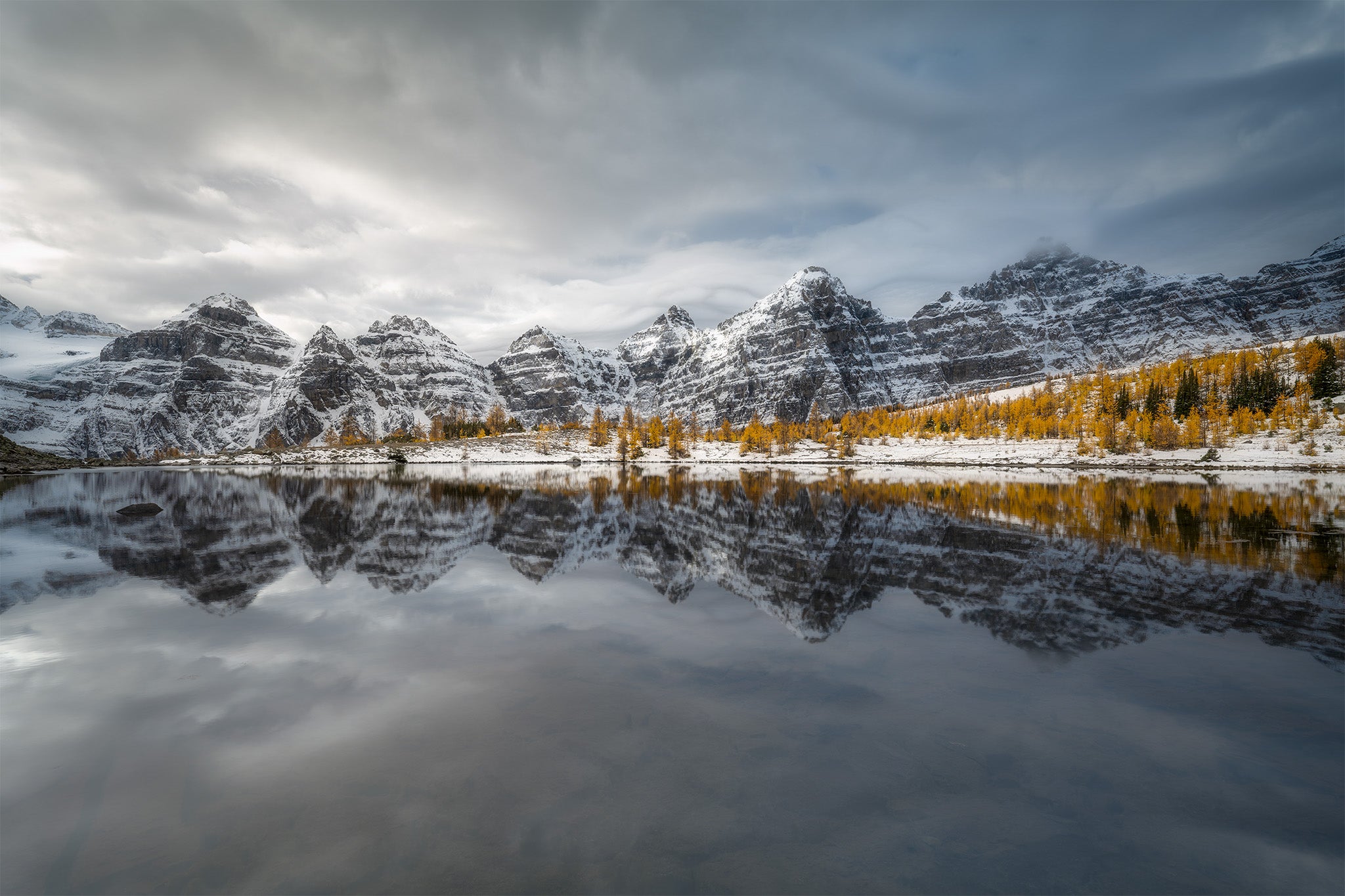
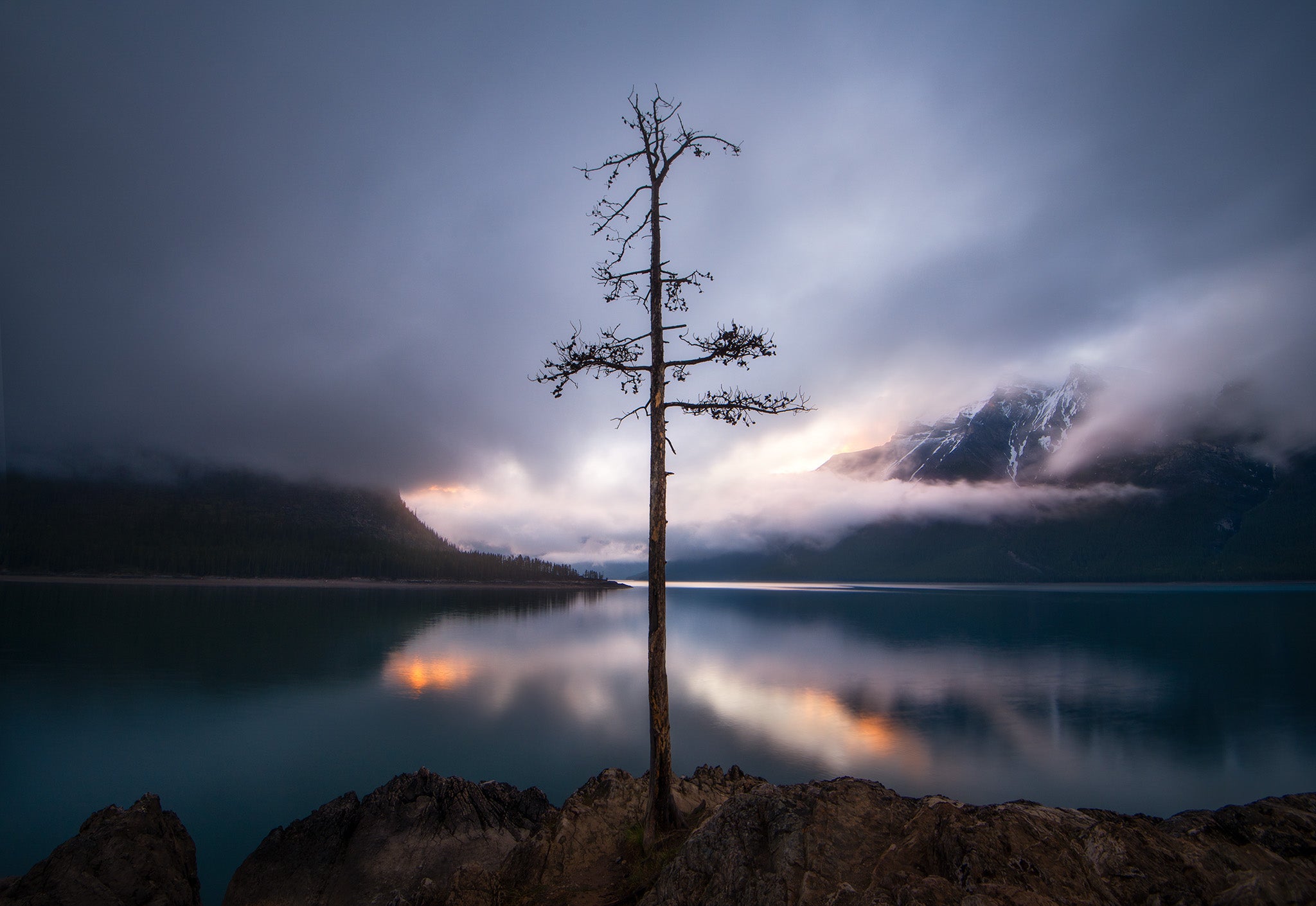
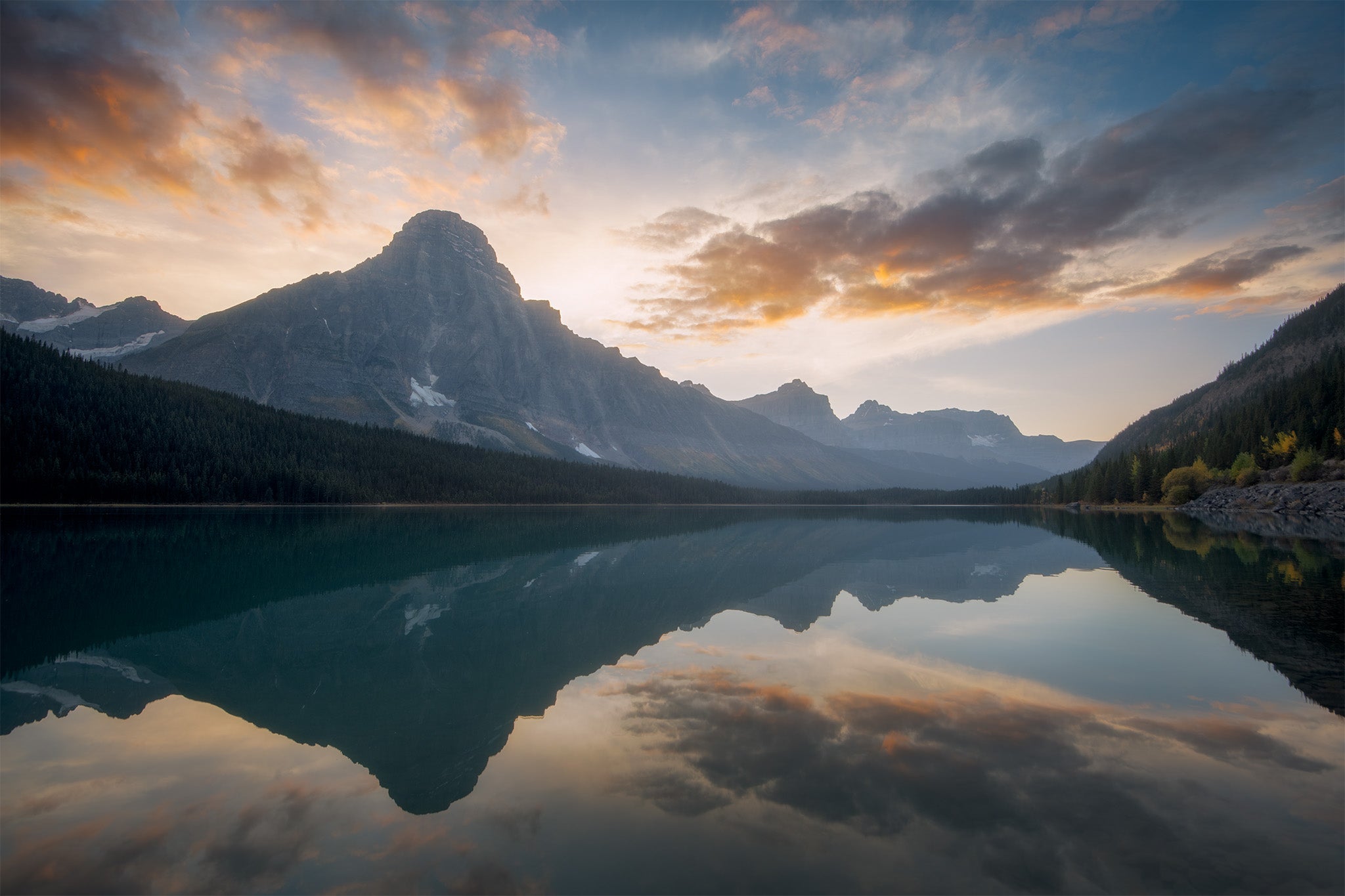
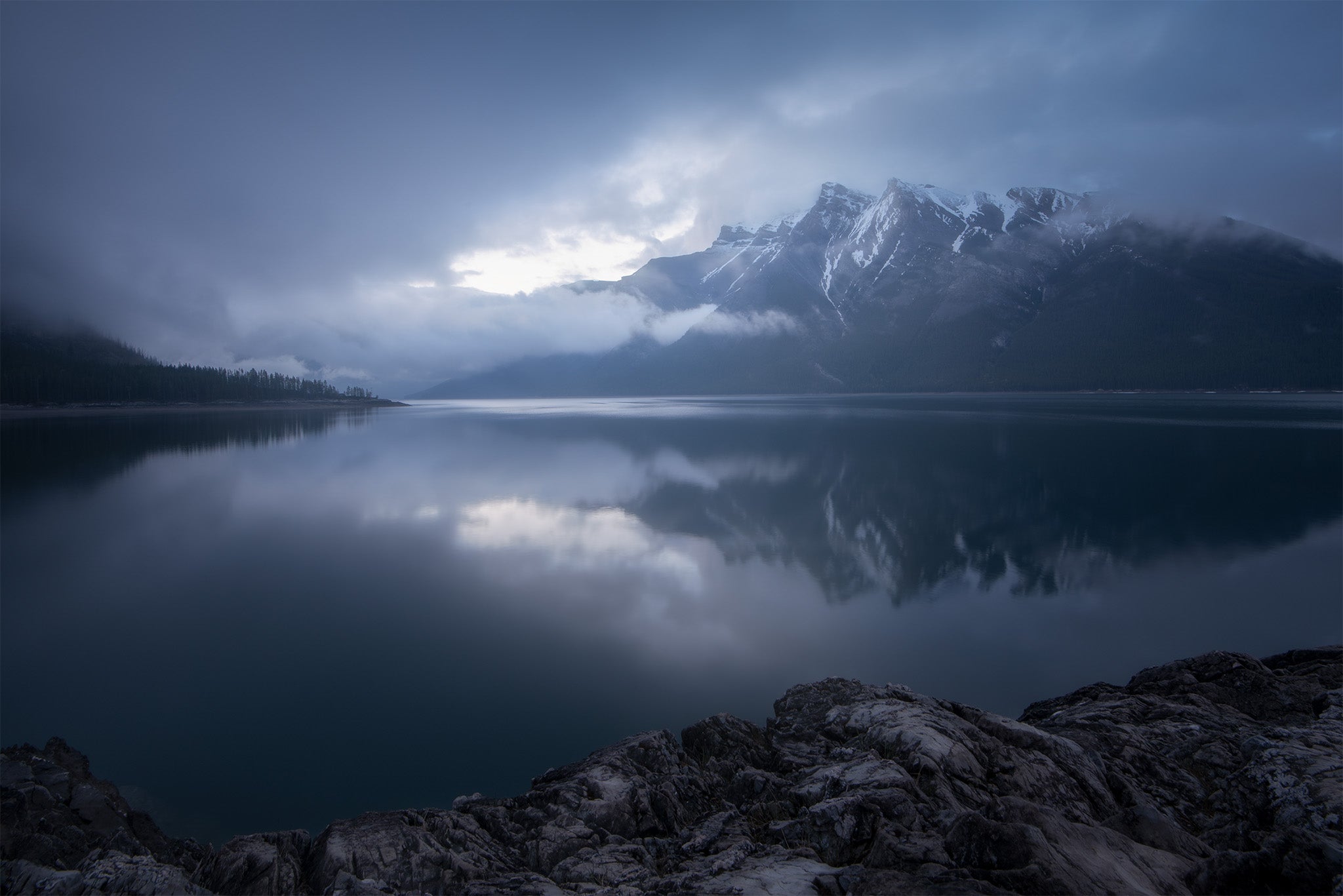
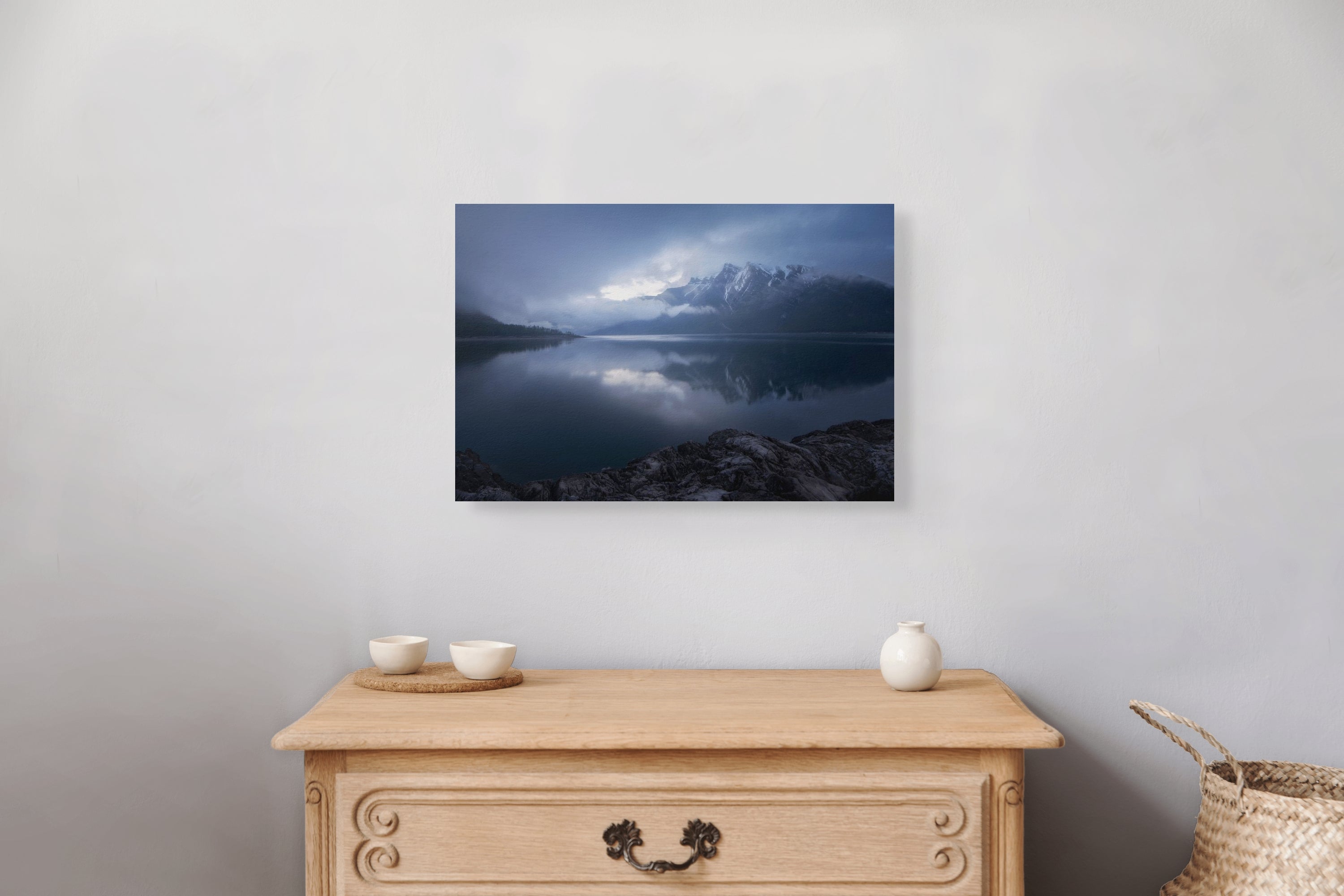
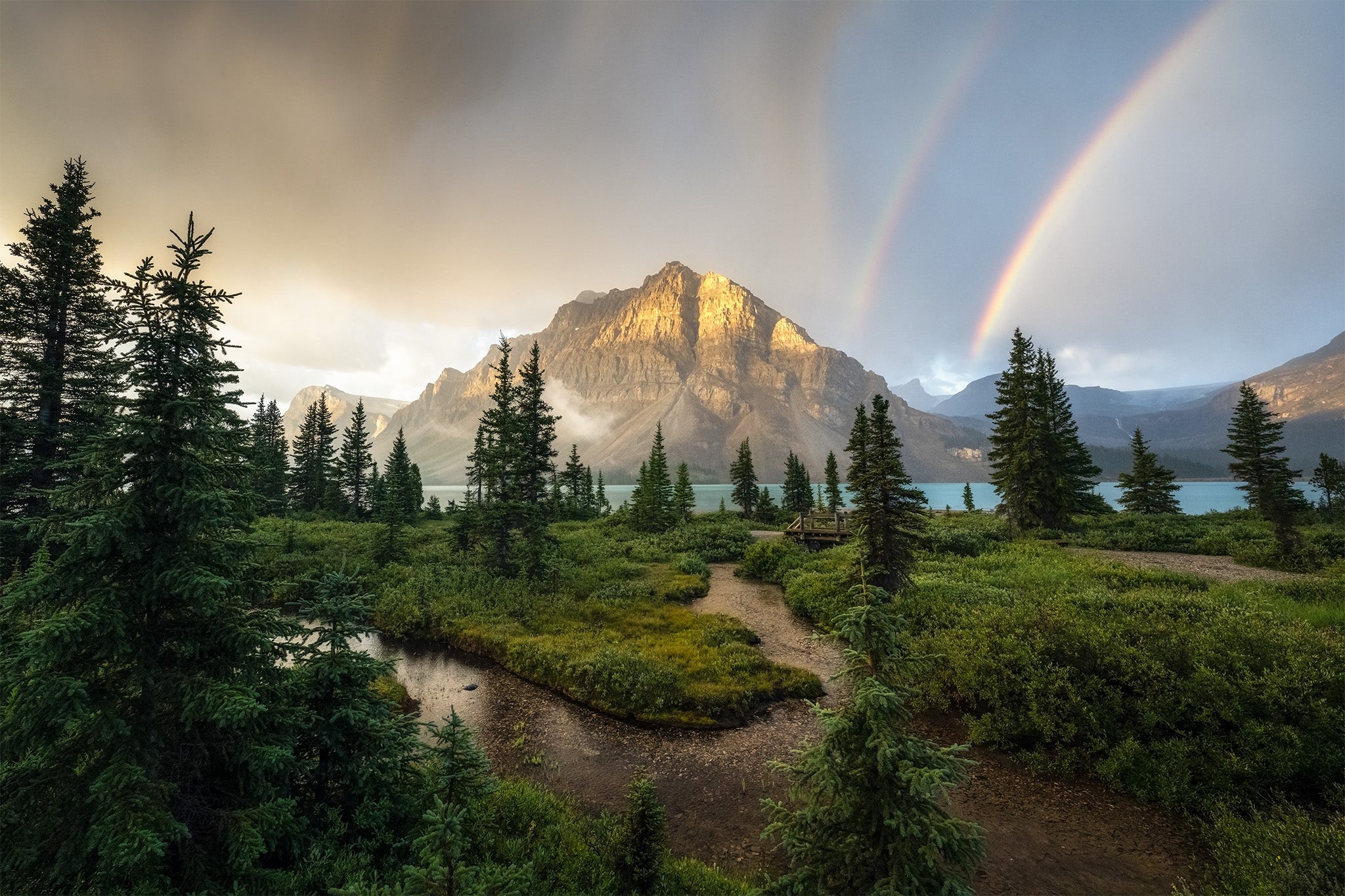
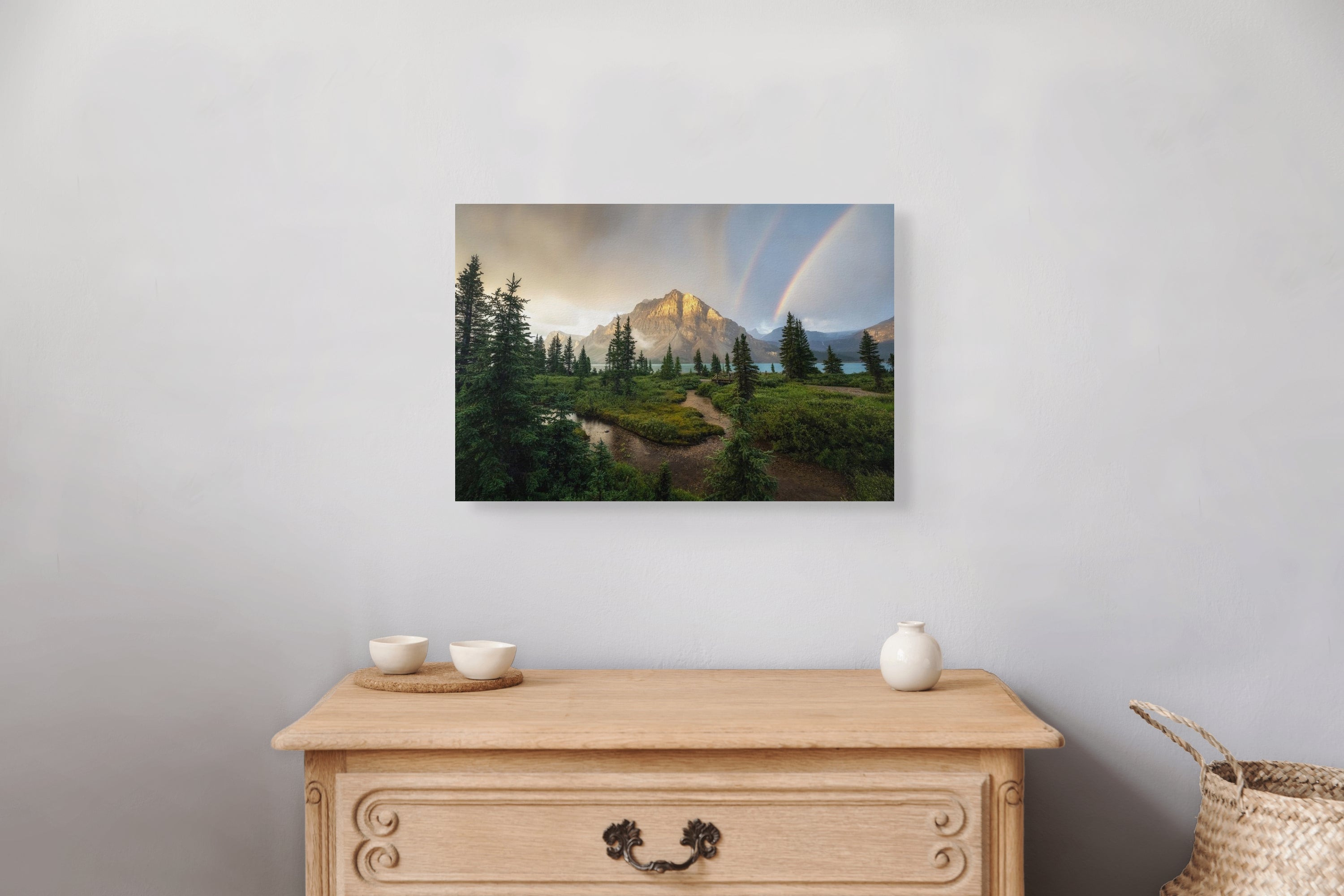
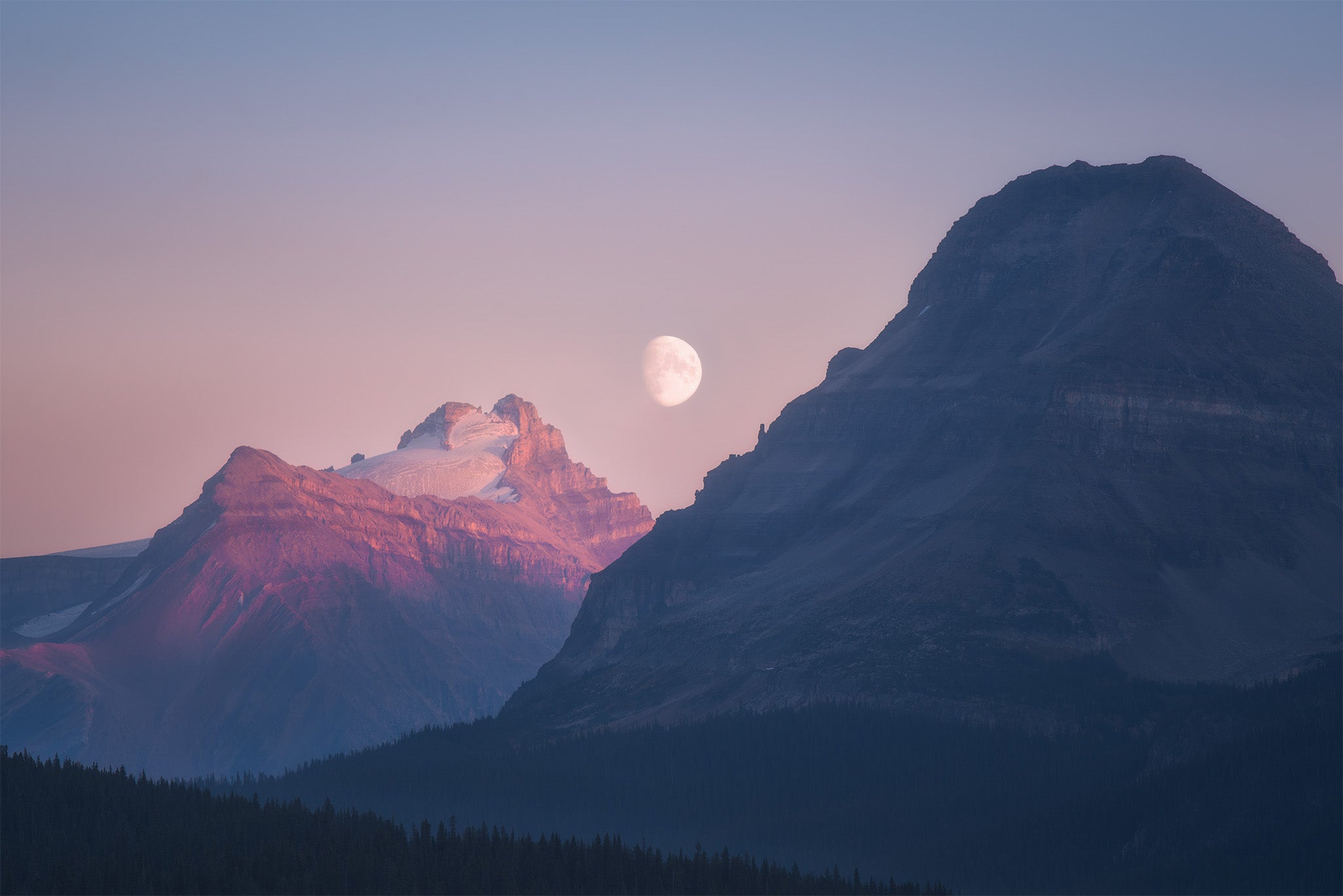
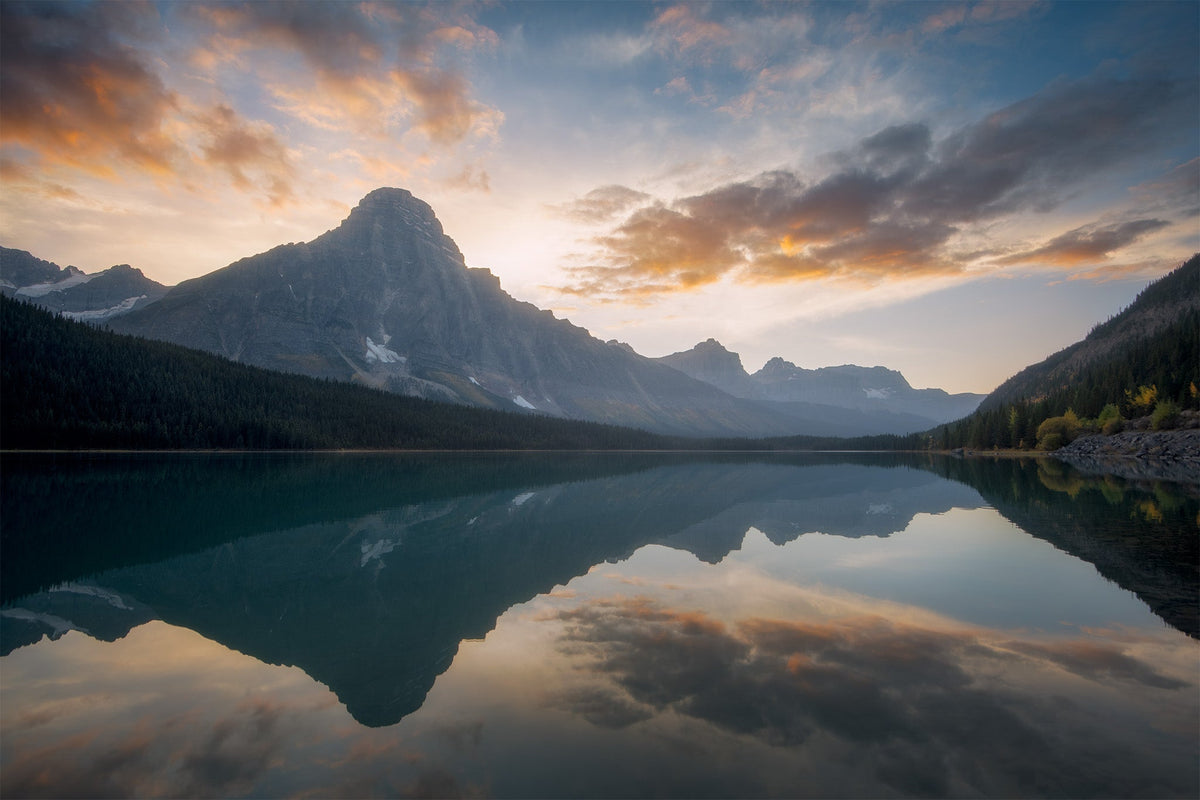
James Andrew has been photographing Banff for years, returning again and again to locations that reward patience. Vermilion Lakes at first light, when the mist lifts off the water and Mount Rundle catches the earliest pink of sunrise. Bow Lake in deep winter, when the glacier above disappears into low cloud and the frozen creek below forms sculptural patterns in the snow. Peyto Lake on a clear winter night, when the aurora arcs over the frozen turquoise basin and the mountains glow faintly in reflected green light. Lake Minnewanka in autumn, when the elk move through the forest and the Palliser Range reflects in still water. These are not locations you visit once. They are locations you return to across seasons and years until they give you something genuinely extraordinary.
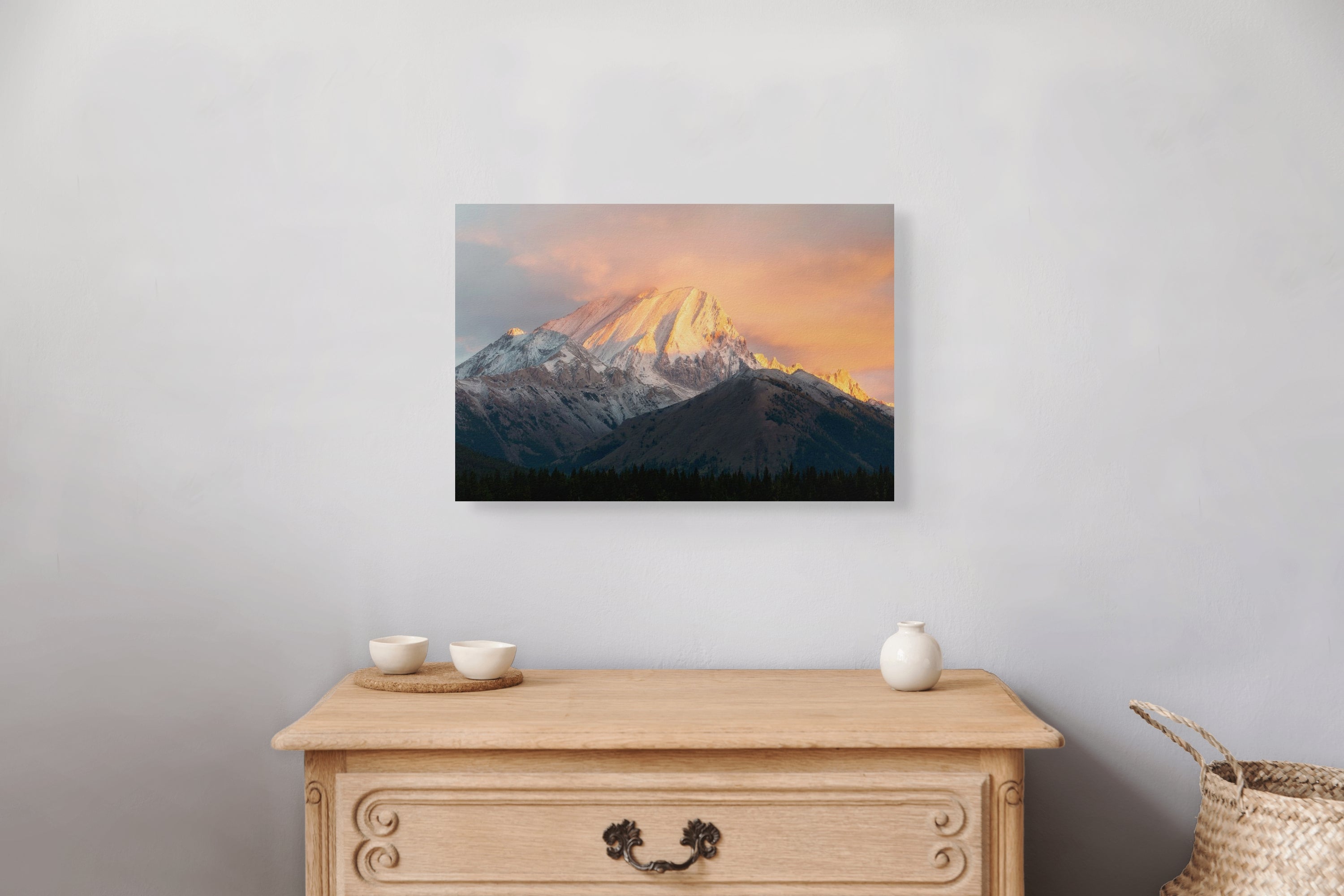
A lake looks different in every season. A mountain peak reveals a new face in different light. The most compelling Banff images don't happen at noon on a clear day, they happen in the thirty minutes after sunrise, in the last light before a storm closes in, or on winter nights when the aurora appears without warning. This collection is the result of hundreds of early mornings, late evenings, and nights spent in sub-zero temperatures waiting for the sky to perform.
The most photographed spots in Banff, Peyto Lake, Bow Lake, Vermilion Lakes — are famous because they are genuinely extraordinary. The turquoise colour of the glacier-fed lakes is real, not edited. The scale of the peaks above the valley floors is humbling in person in a way that photographs struggle to convey. But there is an enormous difference between a snapshot taken from a crowded viewpoint at midday and a fine art print made in conditions most visitors never experience. The difference is the moment, the light, and the intention behind the image.
These are not tourist photographs. They are not the images that fill gift shop shelves or appear on postcards at the Banff townsite. They are collector pieces, made for people who have stood at Peyto Lake and felt something shift, who have driven the Icefields Parkway and wanted to bring that feeling home, who understand that a fine art print is not decoration but a record of a specific moment that will not happen again.
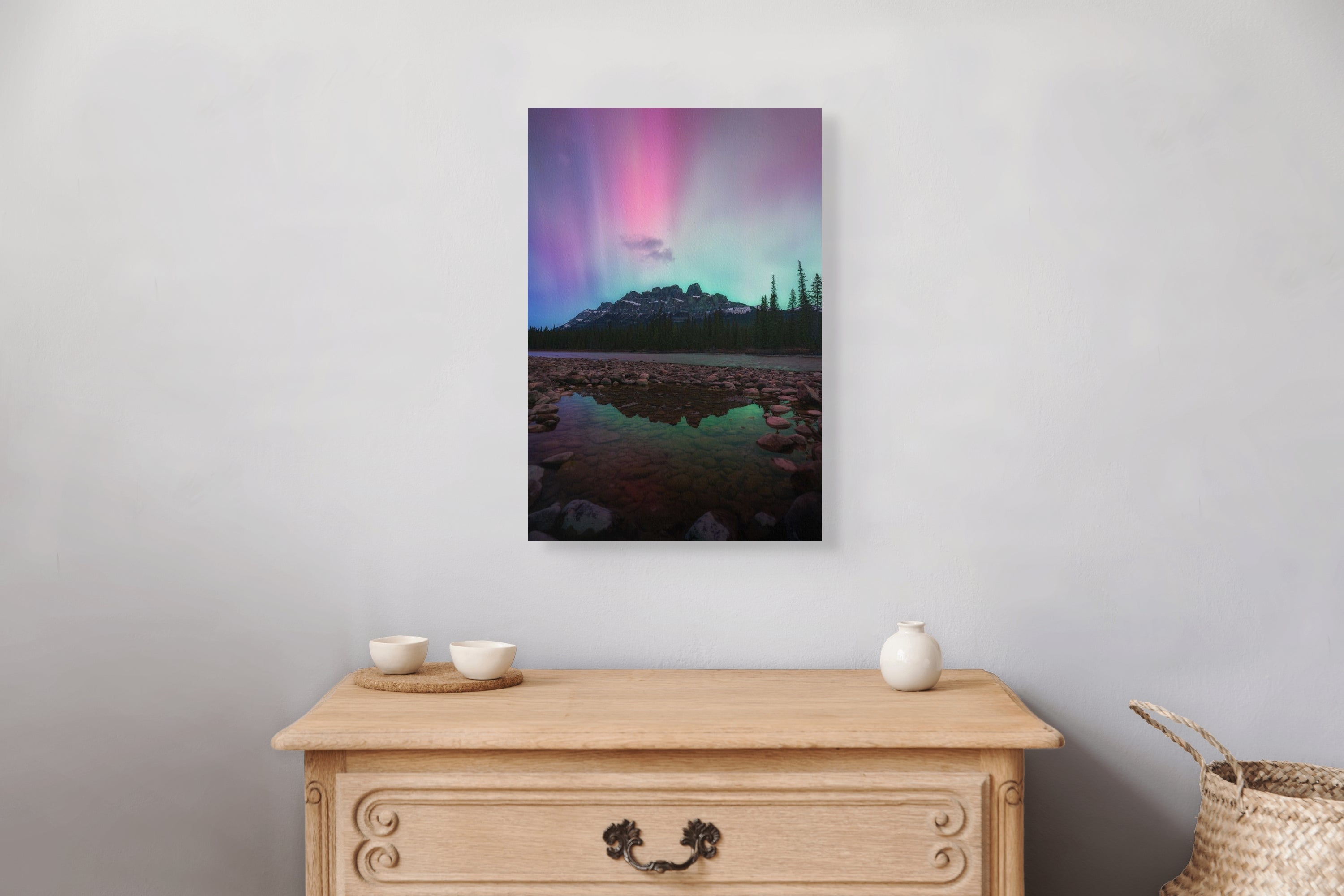
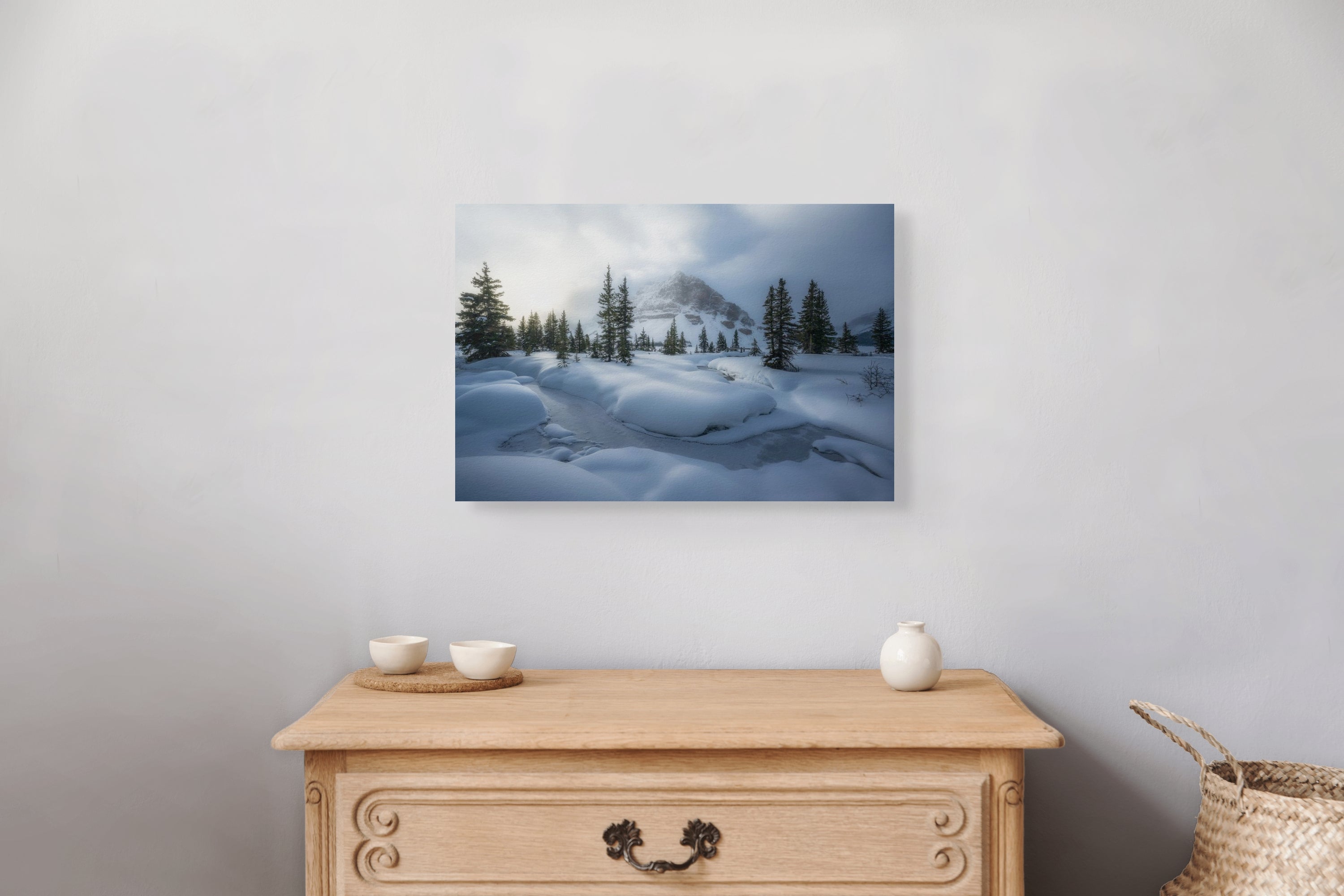
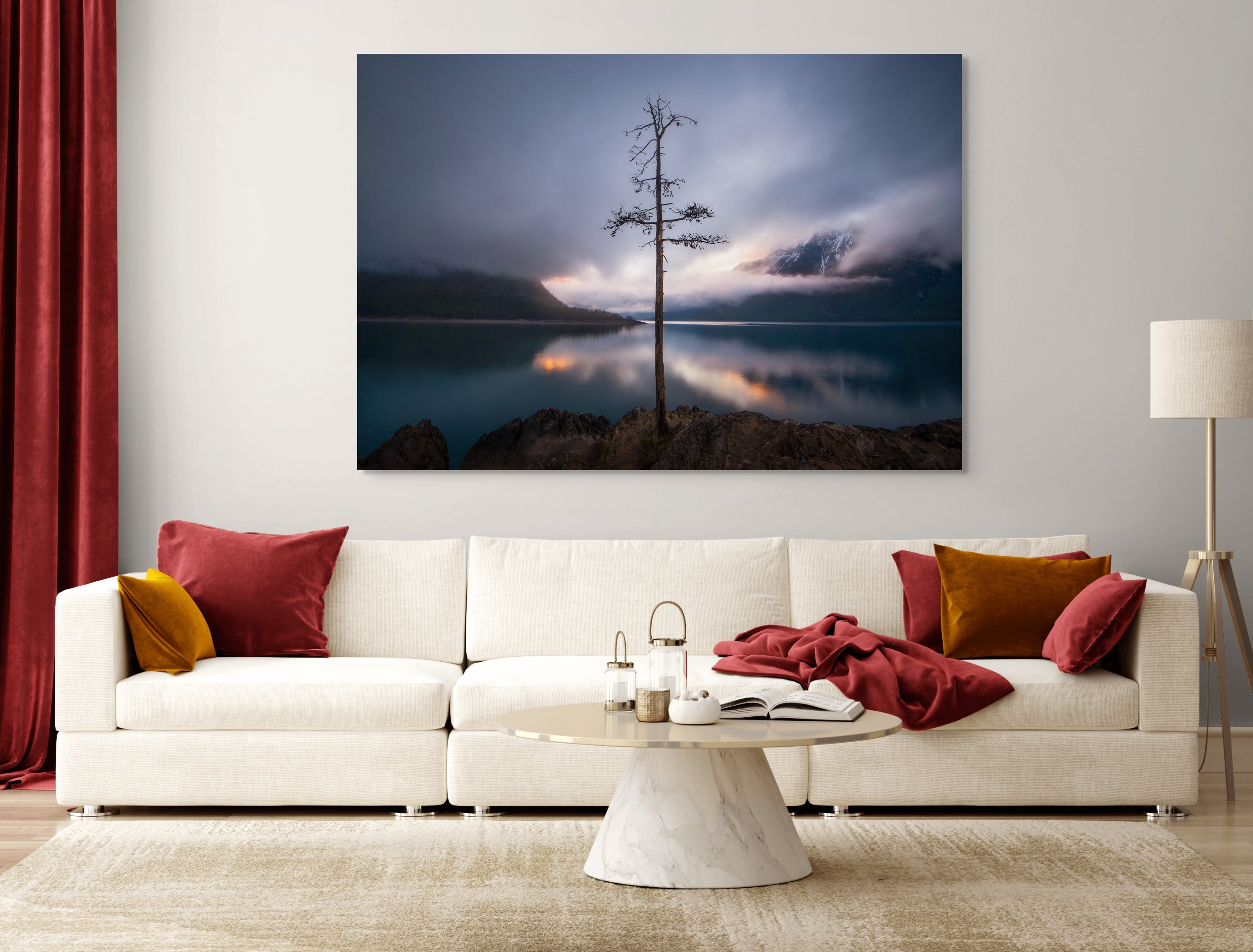
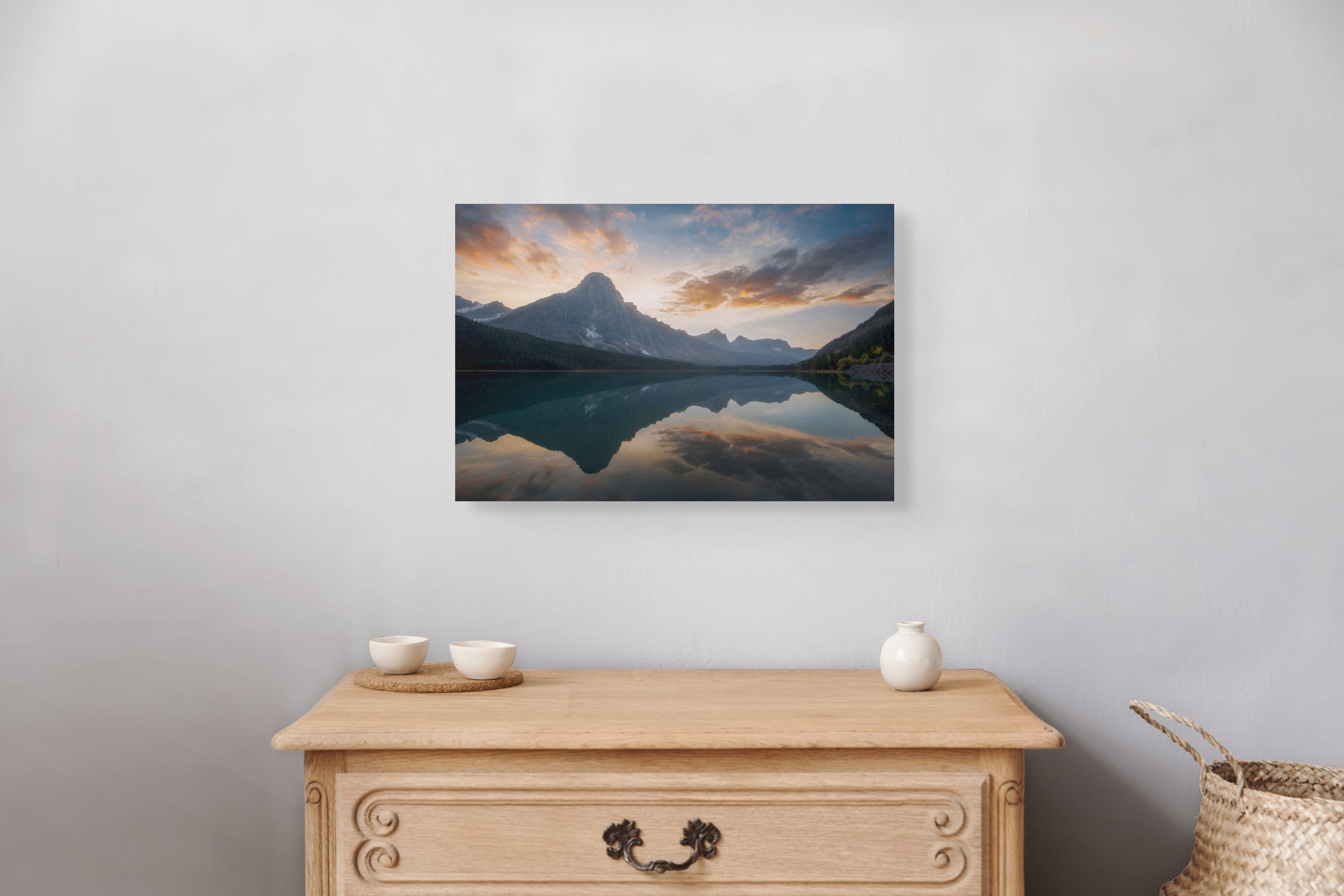
Banff photography prints are available as open editions and limited edition Master Collection pieces, produced on 310gsm Hahnemühle German Etching paper or acrylic facemount. Limited editions are restricted to 10 or 25 prints worldwide, each signed, numbered, and accompanied by a Certificate of Authenticity. Once a limited edition is sold out, it is retired permanently.
Browse Banff by location
→ Bow Lake photography prints — alpine reflections, deep winter, and aurora on the Icefields Parkway → Peyto Lake photography prints — the iconic turquoise lake across the seasons → Aurora Borealis Alberta photography prints — northern lights over Banff and the wider Canadian Rockies
Or browse the full Alberta landscape photography prints collection.